
Introduction
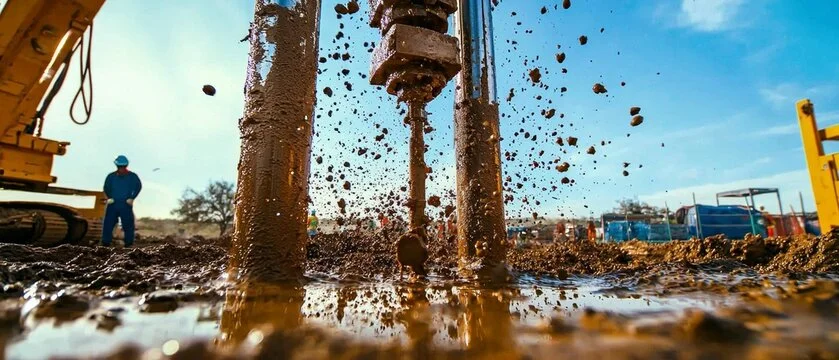
Drilling mud is one of the most essential consumables in the oil and gas industry, directly influencing the quality, safety, and cost of drilling operations. As drilling technology advances and the need for deeper and more complex wells increases, the role and formulation of drilling fluids have become more critical than ever. This article provides a comprehensive and technical overview of drilling mud — including its definition, main functions, classifications, additives, environmental aspects, and modern innovations — to serve as a complete reference for professionals in the field.
Definition and Purpose of Drilling Mud (drilling fluid)
Drilling mud (also known as drilling fluid) is a composite liquid typically made of water, bentonite, polymers, and weighting materials such as barite. Its main objectives are to: transport rock cuttings to the surface, cool and lubricate the drill bit, and stabilize the wellbore during drilling. In addition, maintaining the hydrostatic pressure to prevent blowouts is one of its most crucial functions. A high-quality drilling fluid must exhibit optimal rheological properties, thermal and chemical stability, and compatibility with formation minerals to ensure maximum drilling efficiency.
Core Functions of Modern Drilling Fluids
Pressure Control and Wellbore Stability:
Drilling fluids maintain hydrostatic pressure to prevent wellbore collapse and uncontrolled formation influx.
Cuttings Transport and Hole Cleaning:
The mud carries rock cuttings to the surface efficiently, preventing their accumulation at the bottom of the hole.
Cooling and Lubrication:
Drilling fluids dissipate heat and reduce friction between the drill bit and the formation.
Formation Protection:
A well-formulated mud minimizes fluid invasion and formation damage by creating a thin, impermeable filter cake.
Environmental Impact and Pollution Mitigation
Improper or excessive use of drilling fluids can lead to contamination of soil, surface water, and groundwater. To address this, the modern industry emphasizes the use of eco-friendly, biodegradable additives and optimized waste management practices. Developing green drilling fluids and managing mud disposal are now key challenges for sustainable drilling operations.
Types of Drilling Mud Based on Base Fluid and Application
Water-Based Mud (WBM)
The most common type — composed of water, bentonite, barite, and minerals. It offers good compatibility, low cost, and is suitable for soft to medium formations.
Oil-Based Mud (OBM)
Used in deep and high-pressure wells, this type contains diesel or crude oil, emulsifiers, and polymers. It provides excellent stability and lubrication under high temperature and pressure conditions.
Gas and Foam-Based Mud
A mixture of gas (often air or nitrogen) and water used in shallow or underbalanced formations. This type offers higher drilling speed and lower cost, but has greater environmental and safety risks.
Polymer and Synthetic Mud:
Developed through technological innovation, these fluids use natural or synthetic polymers, gels, or environmentally friendly materials to enhance thermal stability and chemical resistance.
| Type of Drilling Mud | Base Fluid | Solids and Additives | Key Features |
|---|---|---|---|
| Water-Based Mud (WBM) | Water, Brine | Bentonite, Barite, Polymers | Compatibility, Low Cost |
| Oil-Based Mud (OBM) | Diesel, Crude Oil | Barite, Emulsifiers, Polymers | High Stability, Suitable for High Pressure |
| Foam/Gas-Based Mud | Air, Gas | Water, Bentonite, Specialized Additives | High Drilling Speed, Shallow Wells |
| Polymer/Synthetic-Based Mud | Water/Polymer Blend | Proprietary Polymers | High Chemical Resistance |
Key Technical and Laboratory Properties of Drilling Fluids
- Density (Mud Weight)
Controls hydrostatic pressure; adjusted using barite, hematite, or calcium carbonate. - Viscosity
Determines carrying capacity of cuttings; adjusted with bentonite, polymers, and gel agents. Measured using rheometers or viscometers. - Filtration
Refers to fluid loss into the formation; minimized using starch, cellulose, or gilsonite additives. - Thermal Stability
Resistance to temperature variation; enhanced using polymers and silicates.
Each project requires routine quality control and testing to maintain optimal drilling fluid performance.
Additives in Drilling Mud and Their Functional Roles
Density Control: Barite, hematite, calcium carbonate
- Viscosity Regulation
Bentonite, polymers, xanthan gum
- Filtration Control
Starch, lignite, cellulose, gilsonite
- pH Adjustment
Caustic soda, potassium compounds
- Corrosion and Wear Reduction
Polymers, lubricants, graphite-based inhibitors
Advanced Technologies: Smart and Nano-Enhanced Drilling Fluids
Recent technological advancements have introduced nanoparticles and smart materials into drilling fluid formulations. Nanobentonite and nanosilicate significantly improve durability and high-temperature resistance. Smart fluids can respond dynamically to pressure and temperature variations, optimizing performance automatically. In Iran and other developing markets, reverse engineering and local R&D are essential for building independent production capabilities for these advanced materials.
Conclusion and Practical Recommendations
In professional drilling operations, selecting and managing drilling mud should be based on technical, economic, environmental, and operational criteria. Regular laboratory testing, knowledge of modern materials, and reliable suppliers are key to success in drilling projects. Ultimately, effective drilling fluid management ensures higher efficiency, safety, and sustainability in the oil and gas industry.
Does drilling mud pollute the environment?
Yes, but proper waste management and biodegradable additives can significantly minimize its impact.
What are the advantages of polymer-based mud?
High chemical resistance, lower long-term cost, and enhanced performance in harsh conditions.
How is mud quality evaluated?
Through density, viscosity, and filtration tests compared with project-specific standards.
Do nanomaterials improve mud performance?
Generally yes, especially for thermal and pressure stability, but selection must be geology-specific.
How important are safety and cost in mud selection?
Both are critical — optimized mud selection reduces equipment wear, blowout risks, and operational costs.