
فهرست مطالب
An Introduction to Sand Production Control
In 2025, the oil and gas industry faces an undeniable reality: over 70% of the world’s hydrocarbon reserves lie in sandstone reservoirs, and the phenomenon of sand production – and the challenge of controlling it – remains one of the main causes of production downtime and damage to both surface and subsurface equipment.
However, the engineering approach to this challenge has changed fundamentally. If, just a decade ago, the primary solution was to install bulky physical barriers such as gravel packs, today’s technologies operate with far more finesse. The focus of reservoir engineering, in Iran and worldwide, has shifted from “trapping sand” toward “stabilizing it at the source” and “smart flow management.”
In this analytical article, we dive deep into the mechanisms of sand production and provide a detailed breakdown of modern mechanical and chemical methods, from Expandable Sand Screens (ESS) to nanotechnology-based resins.
Understanding the Root Causes of Sand Production: From Diagenesis to Structural Failure
A correct understanding of sand production mechanisms is the prerequisite for any engineering action. Sand production is not a random event; it is the result of disturbing the stress balance around the wellbore.
In Iranian reservoirs – especially sandstone formations in the southwest (such as Ahvaz and Mansouri fields) – this phenomenon has clear and traceable roots.
Incomplete Diagenesis and Weak Cementation
A reservoir rock is essentially a pack of grains held together by cement. The diagenesis process, which is responsible for rock hardening, has not fully taken place in many reservoirs.
Petrophysical studies show that in many producing layers:
Calcite or silica cements are poorly developed, or
They have been partially dissolved due to long-term contact with formation water.
When cement is weak, the rock loses its brittle behavior and shifts toward plastic behavior, becoming highly prone to collapse and sand failure.
Critical Drawdown Pressure (CDP) and Drag Force
The second key factor is fluid dynamics. Every well has a Critical Drawdown Pressure (CDP). When the applied drawdown (difference between reservoir pressure and bottom-hole flowing pressure) exceeds this limit, the drag force exerted by the flowing fluid overcomes the cohesion forces between grains.
An important point is that as reservoir pressure declines over time (depletion), effective stresses on the rock skeleton increase. This means:
A well that is producing sand-free today may experience wellbore collapse and sand production next year, simply due to stress regime changes and depletion.
Technical Review of Mechanical Sand Control Methods: Moving Beyond Traditional Limitations
Mechanical methods are based on a simple principle: placing a physical filter that allows hydrocarbons to flow while blocking solid particles. However, the technological difference lies in how that filtration is implemented.
Gravel Pack: Hidden Challenges of a Long-Standing Standard
For many years, gravel packing was considered the “golden standard” of sand control. In this method, the annular space between the screen and the wellbore is filled with artificially sized gravel.
Filtration Mechanism
The gravel grains form bridges that prevent formation sand from entering the wellbore. In theory, the gravel pack acts as a secondary, engineered formation with a controlled grain size.
Technical Challenges
The biggest drawback of gravel packing is its positive skin factor.
The thick gravel layer itself becomes a significant flow restriction. In addition:
Installing a gravel pack requires high-pressure pumping equipment and complex rig operations.
In long horizontal wells, achieving uniform gravel placement is technically difficult.
Voids often form in the pack, becoming the Achilles’ heel of the system and leading to operational failures and hot spots.
Expandable Sand Screens (ESS): A Revolution in Contact Area
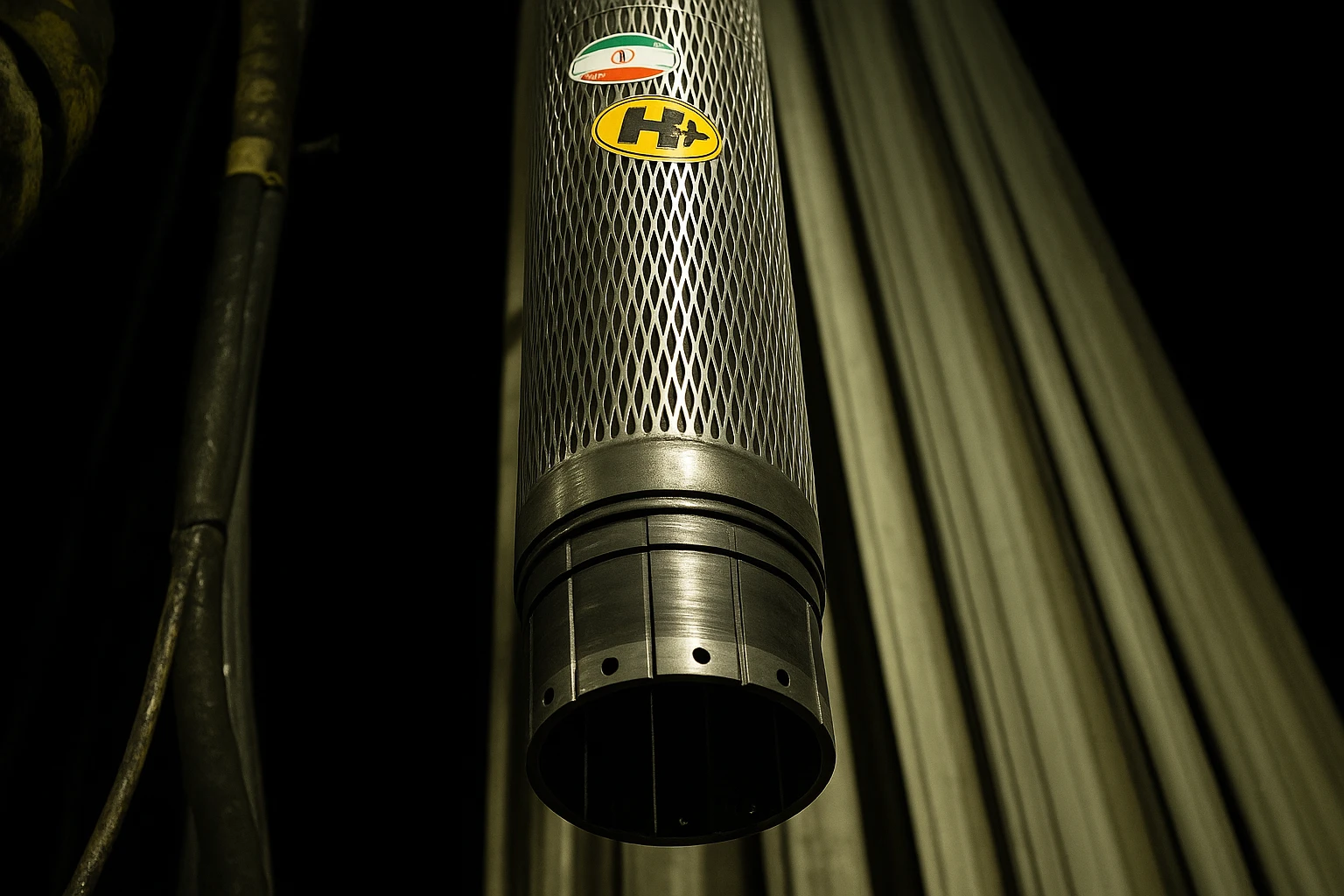
Expandable Sand Screen (ESS)technology was an engineering response to the limitations of gravel packs. ESS consists of multi-layer metallic screens that, after being run into the well, are expanded hydraulically until they firmly contact the wellbore wall.
Elimination of the Annulus
The key advantage of ESS is the elimination of the annular space between the screen and the rock.
In conventional methods, this void allows turbulent flow to develop, accelerating sand particles and increasing erosion risk. By removing this space and hugging the formation directly, ESS effectively kills the kinetic energy of sand particles at the source.
Production Performance
Due to their low thickness and high porosity, ESS systems offer a much larger flow area compared with gravel packs. The result:
Lower pressure drop
Higher production rates
For reservoirs with marginal wellhead pressures, this reduction in pressure loss can be critical to making a project economically viable.
Chemical and Advanced Methods: Consolidation Without Blocking Flow
In many scenarios – especially in old wells (brownfields) or wells where installing downhole hardware is impractical – chemical engineering comes to the aid of petroleum engineering.
Here, the goal is not to “filter” the sand, but to bond it in place.
Aromatic Resins: In-Situ Consolidation
In southwest Iranian reservoirs, the use of aromatic resins has produced impressive results.
Process Chemistry
The method usually involves a three-stage injection sequence:
Pre-flush – prepares and cleans the rock surface.
Main resin injection – often based on furan or phenol–formaldehyde systems.
Catalyst injection – to trigger and accelerate curing.
Mechanism of Action
The resin forms a thin coating over sand grains and concentrates at grain-to-grain contact points. After curing:
These contact points are significantly strengthened.
The Unconfined Compressive Strength (UCS) of the rock increases dramatically.
The engineering challenge is to ensure that the resin primarily targets contact points and does not fill the pore space, so that reservoir permeability is preserved.
An important operational advantage: this method is rigless – it can be performed without bringing a drilling rig to location – which drastically reduces operational cost.
Polymeric Hydrogels (AMPS): Dual-Function Technology
The latest frontier in 2025 is the use of smart hydrogels. These polymers (e.g., sulfonated acrylamide copolymers) behave as much more than a simple glue.
Simultaneous Water and Sand Control
One of the main challenges in sand-producing wells is concurrent water production. Hydrogels exhibit selective adsorption and form a three-dimensional polymer network within the pore space, which:
Increases the compressive strength of the sand pack by up to 20 times (sand control)
Relative Permeability Behavior
The unique feature of hydrogels is their differential impact on phase permeabilities:
Water permeability can be reduced by up to 77 times
Oil permeability is reduced much less (around 4 times)
In practical terms:
A well that previously produced water and sand can, after treatment, be turned into a well with stable oil production and negligible solid output.
Recent advances in sand control technology have fundamentally challenged traditional well-completion paradigms. The shift from “passive control” (simple screens and gravel packs) toward “active control” (ESS and chemical methods) is a clear sign of the industry’s maturity.
For Iranian reservoirs, which frequently struggle with depletion, fine-particle migration and weak cementation, chemical methods such as aromatic resins and hydrogels have earned a special place due to:
Their rigless implementation, and
Their ability to maintain effective wellbore diameter and productivity.
On the other hand, in new wells, ESS technology – by eliminating the annulus and minimizing formation damage – is defining a new standard for high-efficiency completions.
Ultimately, the optimal choice is not based on loyalty to a particular technique, but on a deep understanding of rock physics, fluid chemistry and project economics.
What is the main advantage of ESS compared with Gravel Pack?
The most important advantage of ESS is the elimination of the annular space between the screen and the wellbore wall.
In a gravel pack, the presence of voids or incomplete packing can cause:
Turbulent flow
Localized erosion
Hot spots and early failure
ESS, by expanding and fully conforming to the wellbore, removes this problematic space and, at the same time, provides a larger effective flow area. The result is:
Lower skin factor
Higher production rates
Better long-term sand-control performance
Is there a solution for old wells where bringing a rig is not economical?
Yes. For many mature wells, especially where mobilizing a rig is uneconomic, rigless chemical treatments such as resin consolidation and hydrogel-based treatments can be applied via:
Coiled tubing
Pumping from surface through existing completion strings
These methods stabilize the formation in-situ without requiring mechanical recompletion.
Doesn’t resin or chemical injection block the oil flow path?
No – provided that the job is properly designed.
The goal in chemical methods (resins, hydrogels, etc.) is not to fill the pores. Instead, the aim is:
To deposit the chemical on grain contact points
To strengthen the rock framework while keeping pore channels open
When designed correctly:
Rock strength increases
Porosity and permeability remain sufficiently high for hydrocarbon flow
This is why these treatments can control sand without killing productivity.
How can hydrogel technology control both sand and water at the same time?
Polymeric AMPS-based hydrogels have a dual-function behavior:
They form a 3D network in the pore space, increasing rock strength by up to 20× (sand control)
Chemically, they preferentially reduce water permeability (up to 77×) while oil permeability is reduced much less (around 4×)
Therefore, after treatment:
Sand production is mitigated
Water cut drops significantly,
Oil production becomes more stable and economically attractive.
Why would a well that produced without problems for years suddenly start producing sand?
This often occurs due to reservoir depletion and related geomechanical changes:
As pressure declines, effective stress on the rock skeleton increases.
If the well starts producing water, formation water can dissolve weak cements between grains.
Cohesion decreases, and the wellbore can suddenly lose stability.
The combination of lower pressure, higher effective stress and cement dissolution is a common cause of sudden sand production in wells that had previously been stable.