
فهرست مطالب
In the oil and gas industry, the success of any well intervention or completion operation depends heavily on proper cleaning, preparation and maintenance of the wellbore architecture. Over time, oil wells accumulate layers of drilling mud residue, mineral scale, corrosion products, cement debris, solid particles and various contaminants. These deposits can obstruct tool movement, restrict fluid flow, degrade completion quality and even compromise the structural integrity of the well.
In such an environment, the scraper — or more specifically the casing scraper — becomes a critical tool in workover and completion operations. The casing scraper is designed to remove any deposits, scale or obstructions from the inner surface of the casing, ensuring the well is fully prepared for subsequent operations.
This article provides a comprehensive, technically updated explanation of what a casing scraper is, how it works, the different types available, and the advancements introduced in the latest generation of scraper tools.
What Is a Casing Scraper and Why Is It Essential?
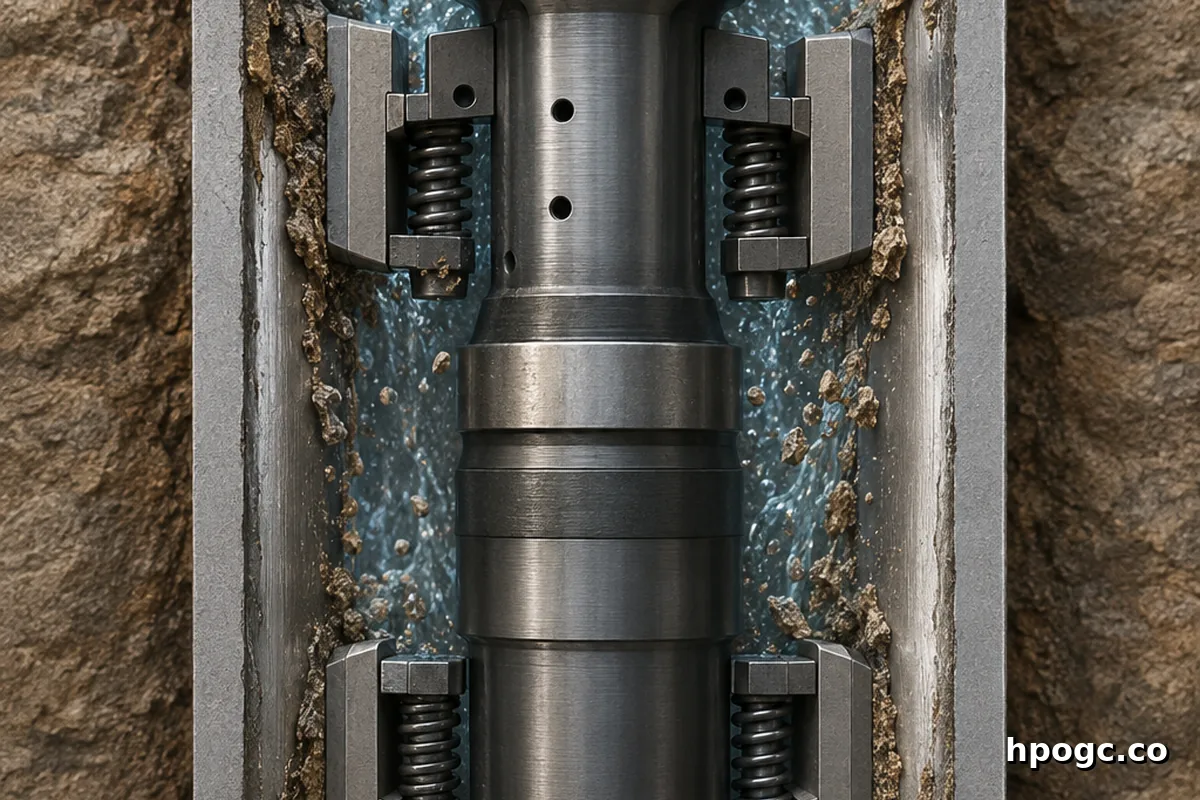
A casing scraper is a mechanical tool designed to scrape, cut and remove deposits adhered to the internal surface of the casing. It is typically run as part of a drillstring, tubing string or, in some cases, cementing and completion assemblies.
Primary Functions of a Casing Scraper
Removal of cement sheath residue
Removal of scale, mineral deposits and sulfates
Cleaning of remaining drilling mud and filter cake
Removal of corrosion products and rust
Prevention of tool sticking during operations
Preparing the well for sensitive tools such as perforating guns, packers and plugs
Improving overall completion quality
Without a scraper, even small amounts of debris can trap multi-million-dollar tools, halt operations and expose the well to serious damage.
Why Wells Develop Problems Without Scrapers
Oil wells are dynamic environments with ongoing chemical and mechanical interactions. During drilling and production, several types of deposits can form on casing surfaces:
Cement and mud residues
Portions of cement may adhere to the casing after cementing operations, causing obstructions for packers or guns.Scale and mineral deposits
Continuous exposure to subsurface fluids — especially in sour wells — causes hard scale formations.Corrosion by-products
Internal corrosion generates flakes and metallic debris that obstruct tool movement.Paraffin and asphaltene buildup
Heavy hydrocarbons may precipitate and accumulate on the casing wall.Solid particle settlement
Sand and solids can accumulate along the casing over time.
All these factors make the well unprepared for further operations. A proper scraping job ensures operational safety, tool mobility and production reliability.
How Does a Casing Scraper Work?
A casing scraper consists of cutting blades, spring-loaded arms and a cylindrical body designed to run into the well. As the scraper moves up-and-down or rotates, the blades scrape and dislodge deposits from the casing wall.
Typical Scraping Procedure
Run-in-hole with the scraper assembled on the string
Scraping operation:
Up-and-down strokes
In some cases, rotation of the drillstring
Deposit removal as blades cut and dislodge debris
Circulation of drilling fluid to transport debris to the surface
Final inspection, often with drift tools or logging instruments
Multiple scraping passes are commonly performed to ensure full casing cleanliness.
Types of Casing Scrapers in the Oil Industry
- Mechanical Casing Scrapers
The most common type, equipped with strong steel blades for removing hard deposits such as:
Cement
Heavy scale
Severe corrosion
- Hydraulic Scrapers
Blades open or close using hydraulic pressure. Ideal for:
Deviated wells
Non-uniform deposition zones
- Brush Scrapers
Equipped with metallic brushes. Best for:
Soft deposits
Lightweight mud residues
- Combination Scrapers
Contain both blades and brushes. Ideal for wells containing mixed deposition types.
Practical Applications of Casing Scrapers
A casing scraper is utilized during several critical phases of well operations:
1. Before Packer Installation
Ensures the packer setting zone is completely clean—any irregularity can cause leakage or packer failure.
2. Before Perforating
Perforating guns must travel to target depth without obstruction.
3. Before Cement Squeeze Jobs
A clean casing surface is essential for proper bonding and cement adherence.
4. Before Running Tubing
Reduces tool sticking and operational delays.
5. Workover Operations
Old wells require scraping the most due to heavy deposition.
6. Improving Well Integrity
Reduces risks of leakage, corrosion propagation and structural issues.
Next-Generation Casing Scrapers: Stronger, Smarter and More Efficient
In the past decade, scraper technology has evolved significantly. Modern scrapers now include:
1. High-alloy blade materials
Cr–Ni steels and titanium alloys to prevent blade failure.
2. Modulated Blade Assembly
Allows blades to adapt to oval or irregular casing geometries.
3. Heavy-Duty H₂S/CO₂-Resistant Scrapers
Suitable for sour and corrosive wells.
4. Multi-purpose Clean-Out Tools
Integrated assemblies combining:
Scraper
Magnet sub
Brush
Junk basket
5. Enhanced designs for deviated & horizontal wells
Ensures constant 360° contact with the casing.
6. Optimized fluid flow paths
Improved circulation for faster removal of debris.
These innovations make new-generation scrapers:
Safer
More efficient
Longer-lasting
The casing scraper is one of the most essential tools in modern oilfield operations. Its role extends beyond basic cleaning; it directly contributes to:
Increasing well lifespan
Preventing costly tool sticking
Enhancing well integrity
Reducing workover costs
Improving completion and production quality
Using modern, advanced scrapers can significantly improve well performance and eliminate critical operational risks.
For any professional well operation, understanding scraper technologies and selecting the right model is a necessity—not an option.
What exactly is a casing scraper and what does it do?
A casing scraper is a mechanical tool designed to scrape and remove cement, scale, mud residue, corrosion and other deposits from the inside surface of the casing, ensuring the well is fully prepared for operations such as packer installation or perforating.
Why is a scraper essential before completion operations?
Because debris inside the casing can:
Trap tools
Reduce completion quality
Prevent proper packer sealing
Cause leakage or failure
Scraping ensures maximum cleanliness and operational safety.
How does a scraper operate — by rotation or reciprocation?
Both are possible. Typically, the scraper is run on drill pipe or tubing and works through reciprocation, rotation or both. Circulating fluid removes loosened debris.
What types of deposits can a scraper remove?
Cement residue
Scale and minerals
Dried drilling mud
Rust and corrosion
Paraffin and asphaltene
Sand and solids
Burrs from perforation
When should scrapers be used during the well’s life cycle?
Before packer / plug setting
Before perforation
Before cement squeeze jobs
During workover operations
Before running tubing
Whenever heavy deposits are present
Before packer / plug setting
Before perforation
Before cement squeeze jobs
During workover operations
Before running tubing
Whenever heavy deposits are present
What is the difference between mechanical, spring-loaded and combination scrapers?
Mechanical: Hard deposits (cement, scale)
Spring-loaded: Better contact and uniform scraping
Combination: Handles multi-type deposits
What features distinguish next-generation scrapers?
Alloy blades
Full 360° coverage
Sour-service capability
Multi-function clean-out tools
Designs for deviated/horizontal wells
How to choose the right scraper?
Consider:
Casing ID
Deposit type
Well geometry
Next operation (packer, perf, tubing)
HPHT or sour conditions
Does a scraper damage the casing?
No — not when properly selected and operated. Blades are engineered to remove deposits, not cut or weaken the casing.