Introduction
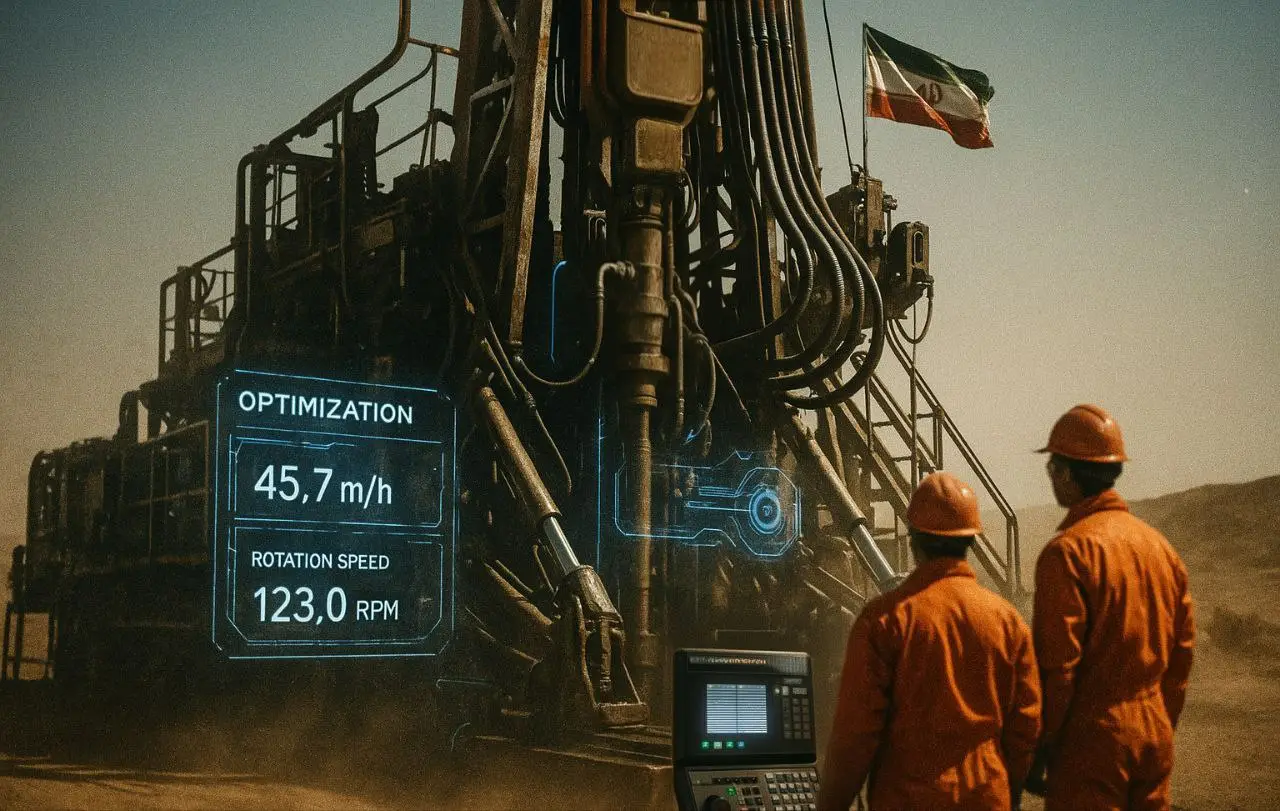
Oil well drilling is one of the most complex and cost-intensive stages in field development. Errors in estimating geological conditions or selecting operational parameters can lead to pipe sticking, wellbore instability, or soaring costs. In this context, the massive amount of drilling data generated during operations has created an opportunity to make smarter and faster decisions through Artificial Intelligence (AI).
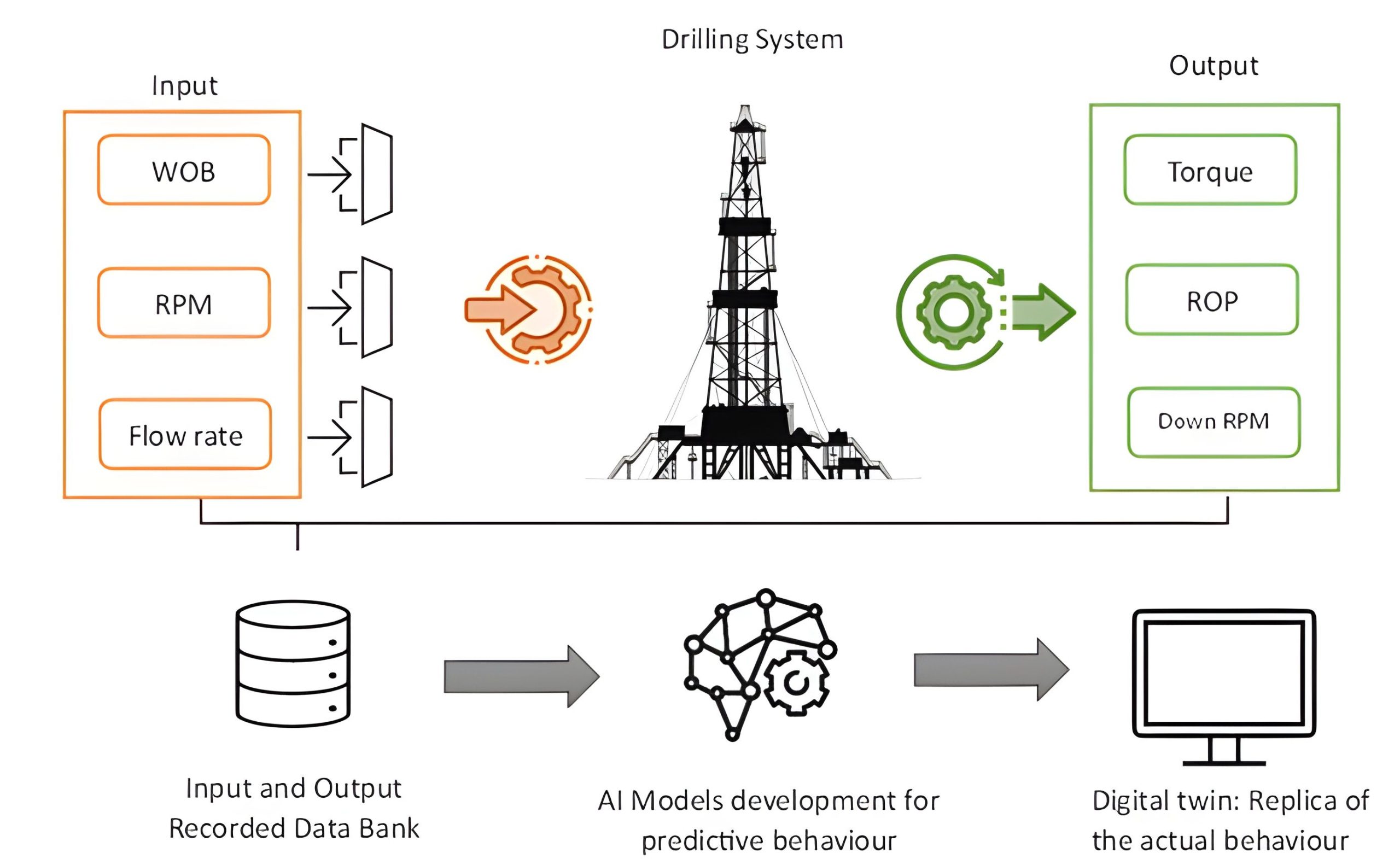
By analyzing both historical and real-time data, AI not only predicts system behavior but also learns hidden patterns to automatically adjust and optimize drilling operations.
Key Applications of Artificial Intelligence in Drilling
Predicting and Optimizing Rate of Penetration (ROP)
Machine learning models can predict the ROP based on formation type, bit characteristics, weight on bit (WOB), rotational speed (RPM), and drilling mud properties. Algorithms such as Random Forest, XGBoost, and Neural Networks have achieved high prediction accuracy in industrial projects and can recommend optimal parameters to drilling operators.
Detecting and Forecasting Pipe Sticking and Downhole Incidents
Time-series classification algorithms can identify early warning signs of Stuck Pipe or Kick before they occur. In several studies, AI models have predicted these issues up to 5 hours earlier than human alerts, significantly reducing non-productive time and operational risk.
Predictive Maintenance for Drilling Equipment
In deep drilling operations, failures of pumps, downhole motors, or the Bottom Hole Assembly (BHA) can cause severe downtime and financial losses. AI models that analyze vibration, temperature, and pressure data can accurately predict failure timing. This Predictive Maintenance approach has reduced Non-Productive Time (NPT) by 10–15% in pilot projects.
Automated Steering and Smart Directional Drilling
Intelligent systems analyze real-time BHA and trajectory data to automatically adjust bit direction and minimize deviation from the target path. In the near future, the integration of AI and Digital Twin technologies will enable Fully Autonomous Drilling operations.
Real-Time Geophysical Property Estimation Using MWD/LWD Data
Deep learning models can extract formation patterns from MWD and LWD data to estimate rock and fluid properties in real time. These insights accelerate decision-making for drilling parameter adjustments.
Roadmap for AI Implementation in Drilling Companies
- Data Collection and Cleansing from rigs and well logs
- Pilot Project Design to demonstrate Proof of Value (PoV)
- Model Development for ROP, stuck pipe, and equipment failure with evaluation metrics (MAE, RMSE, F1)
- Deployment in Real Operations and operator training
- Continuous Model Updates and Monitoring using an MLOps framework
Benefits of AI Implementation in Drilling
- Reduced drilling cost and time
- Enhanced safety and minimized human error
- Consistent performance across rigs
- Data-driven decision making
- Faster training for new personnel
Challenges and Limitations
- Data Quality – Incomplete or noisy data limit model accuracy.
- Model Interpretability Operators must understand AI decisions in critical systems.
- Integration with Legacy Infrastructure – Cybersecurity and compatibility issues with existing systems.
- Lack of Multidisciplinary Talent – Need for drilling engineers with data literacy and analysts with operational knowledge.
Global Case Studies and Leading Companies
The use of AI and machine learning in drilling is rapidly expanding worldwide. Major service companies like Schlumberger, Halliburton, Baker Hughes, and Weatherford have deployed AI-driven systems for ROP prediction, drilling optimization, and real-time fault detection. For example, Schlumberger’s DELFI platform and Baker Hughes’ VESPER system enable real-time well data management and predictive analytics.
Other global projects utilize Deep Learning and Support Vector Machine (SVM) models to classify formations and forecast pipe blockage. In offshore fields, intelligent systems recommend optimal drilling parameters in real time, reducing risks of blowouts or bit failures. These experiences highlight how the convergence of sensor data, physical modeling, and AI algorithms can significantly enhance drilling efficiency and safety. For Iran, adapting these technologies to local geological conditions and data structures is the key to successful AI localization.
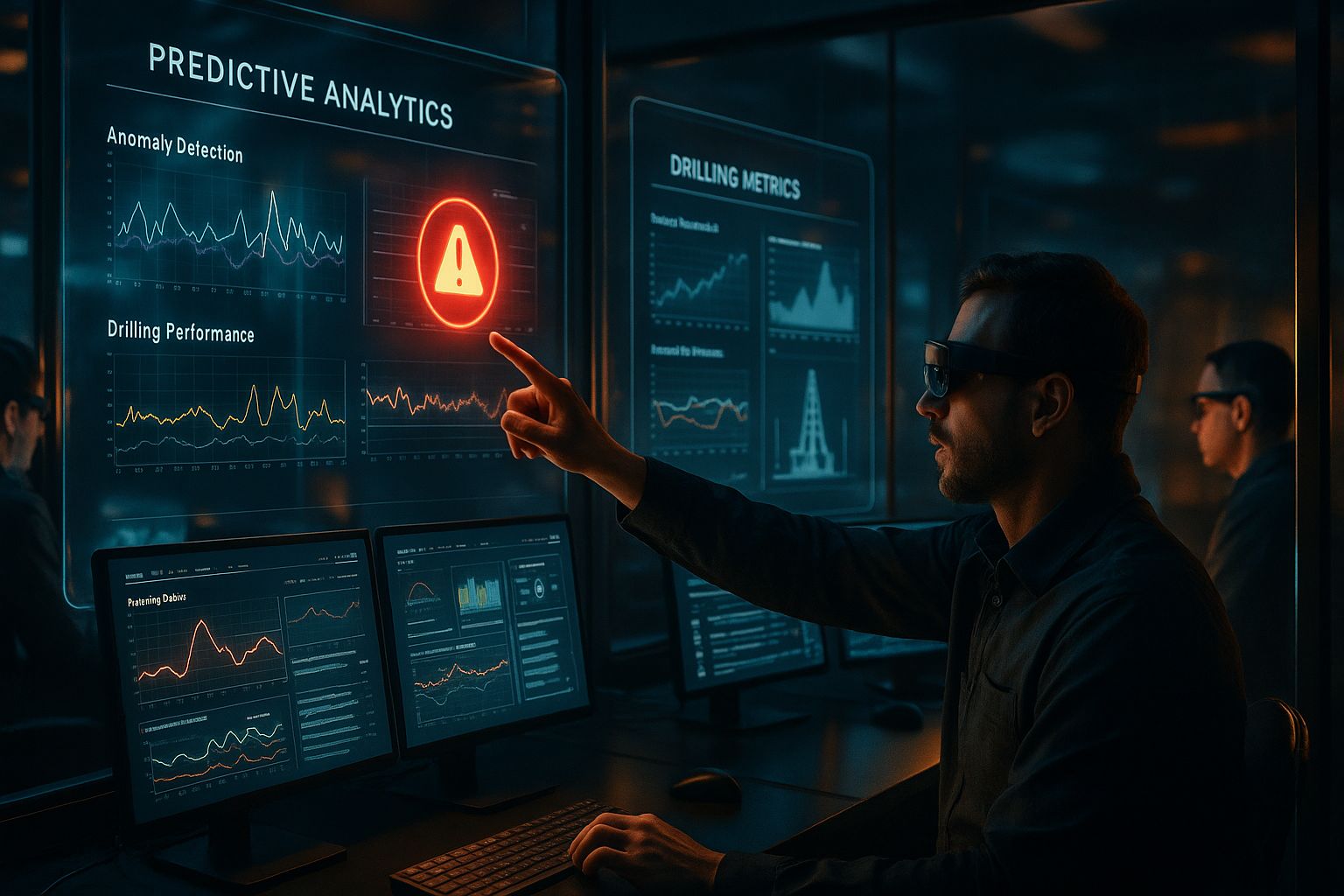
Current Status of Iran’s Drilling Industry and the Need for Digital Transformation
General Overview
Iran’s drilling industry still relies heavily on traditional methods and human judgment. Key challenges include high drilling costs, data fragmentation, non-productive downtime, and limited real-time monitoring. However, economic pressures and the demand for higher efficiency have made automation and digital drilling an urgent necessity.
Companies such as National Iranian Drilling Company (NIDC), PEDC, and North Drilling Co. have initiated projects on data collection, processing, and intelligent modeling focused on ROP prediction, mechanical risk identification, and drilling parameter optimization. Smart drilling is a strategic necessity for Iran — not only to cut costs and time but also to enhance worker safety and minimize environmental risks.
Data and Digital Infrastructure in Iran’s Drilling Industry
Effective AI deployment requires robust and integrated data infrastructure. In Iran, drilling data — including historical logs, MWD/LWD information, mud and bit sensor data, and geophysical datasets — are stored across different internal systems. However, lack of standardization, data fragmentation, and incompleteness remain major barriers.
Initiatives have begun to establish Data Lakes and centralized repositories within subsidiaries of the Ministry of Petroleum. Universities and tech-based startups have also partnered with NIOC to develop data-cleaning tools, format integration, and real-time monitoring dashboards.
Still, challenges such as limited bandwidth at remote rigs and cybersecurity concerns persist. Expanding fiber networks, applying data compression, and adopting Edge Computing will improve data quality — yet the path toward smart wells and unified data management remains long.
Opportunities and Benefits of Localizing AI Technology
Localizing AI technology in Iran’s drilling industry offers multiple benefits:
- Technological Independence Reducing dependency on foreign software and saving foreign exchange costs.
- Enhanced Data Security Sensitive field information remains stored domestically.
- Economic and Industrial Growth – Encouraging local platform development, intelligent algorithm creation, and the rise of data-driven drilling startups.
- Operational Efficiency AI-driven systems can reduce drilling time by 10–20% and substantially lower costs. Customizing algorithms for local datasets will improve predictive accuracy and field performance.
Recommendations and Future Outlook
The five-year vision for AI in Iran’s drilling sector includes real-time operation management, deep-learning-based mechanical failure prediction, and integration with Digital Twin for simulation and well optimization.
Recommended actions include:
- Developing national standards for drilling data to enable inter-company integration.
- Establishing a National Drilling AI Laboratory in collaboration with the Ministry of Petroleum, universities, and private sectors.
- Investing in interdisciplinary education to train data-savvy drilling engineers.
- Supporting tech-based enterprises in developing localized AI software and platforms.
These measures will help Iran progress toward gradual digital transformation in drilling and position the country as a regional leader in AI-driven upstream operations.
HPOGC’s Role and Initiatives
In recent years, in response to the growing need for digital transformation, Hamrah Pooshesh Oil & Gas Company (HPOGC) has been actively engaged in collecting operational data, conducting continuous R&D, and evaluating advanced drilling technologies and software solutions. The company’s mission is to deliver tangible value to Iran’s oil and gas drilling industry through innovation and intelligent solutions.
Future Outlook and Conclusion
AI in oil well drilling is no longer an option — it is a strategic necessity for competitiveness and sustainability in the energy industry. In the coming years, the integration of Digital Twin, IoT, and Reinforcement Learning will transform drilling from human-driven decision-making to autonomous and predictive control. The ultimate result will be higher efficiency, reduced risk, and improved safety across the drilling ecosystem.